The History of Emperor Justinian I in Egypt: Faith, Grain and Legacy

The History of Emperor Justinian I in Egypt: Faith, Grain and Legacy
How did an emperor who never visited Egypt shape its grain trade, its church and its monasteries? A clear guide to Justinian I in Egypt, with the plac...

The History of Emperor Justinian I in Egypt: Faith, Grain and Legacy

The History of Emperor Justinian I in Egypt: Faith, Grain and Legacy

The History of Emperor Justinian I in Egypt: Faith, Grain and Legacy

Why Egypt Mattered to Justinian

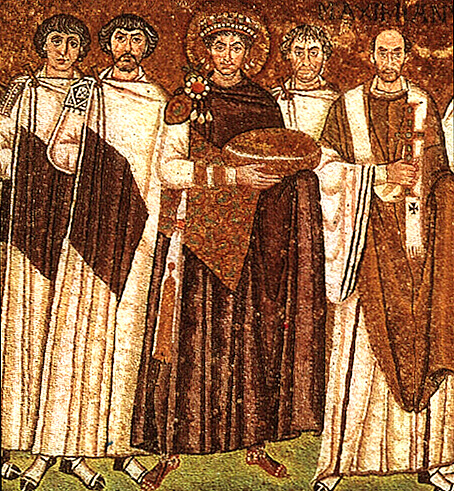
Emperor Justinian I ruled the Eastern Roman Empire from Constantinople between 527 and 565, and there is no record of him ever visiting Egypt. Yet few provinces shaped his reign as much. Egypt supplied grain, tax revenue and some of the Christian world's most influential thinkers, and it was governed from Alexandria, its capital. His power reached the Nile through governors, generals, bishops and edicts rather than in person, and that distance explains much of what happened there.

Grain, Taxes and Edict XIII

Egypt fed Constantinople. Grain shipped out of Alexandria every year kept the capital supplied, while the province's taxes helped pay for Justinian's campaigns in Italy and North Africa. Around 539, an imperial decree known as Edict XIII reorganised Egyptian administration, strengthened the Augustal prefect who governed from Alexandria and set rules for the grain fleet. Papyri from Upper Egypt, including the archive of the notary and poet Dioscorus of Aphrodito, preserve village petitions against abusive tax collectors. They show how heavily the system could weigh on ordinary families.

Faith, Power and the Church of Alexandria

Religion divided Egypt more than any tax. Most Egyptians followed the Miaphysite creed, the ancestor of today's Coptic Orthodox Church, which rejected the Council of Chalcedon of 451. Constantinople backed Chalcedon. Justinian searched for a compromise for years, and Empress Theodora quietly sheltered Miaphysite leaders who were under pressure.

The compromise failed in Alexandria. Theodosius I, the Miaphysite patriarch, was removed in 537 and held in Constantinople, and the emperor installed Chalcedonian patriarchs in his place. Many Egyptians saw them as outsiders imposed from above. The gap between a Greek speaking administration and a Coptic speaking countryside widened, and some historians link it to the fragility of imperial rule in Egypt in the following century.

Philae and the End of Temple Worship

At Philae, near Aswan, the temple of Isis had stayed active long after most Egyptian temples fell silent. The court historian Procopius records that Justinian ordered the sanctuaries closed. The general Narses carried out the order, the priests were detained and the cult statues were sent to Constantinople. The exact date is debated, but it falls in the 530s. The temple was later converted into a church, which kept the structure in use.

Saint Catherine's Monastery in Sinai

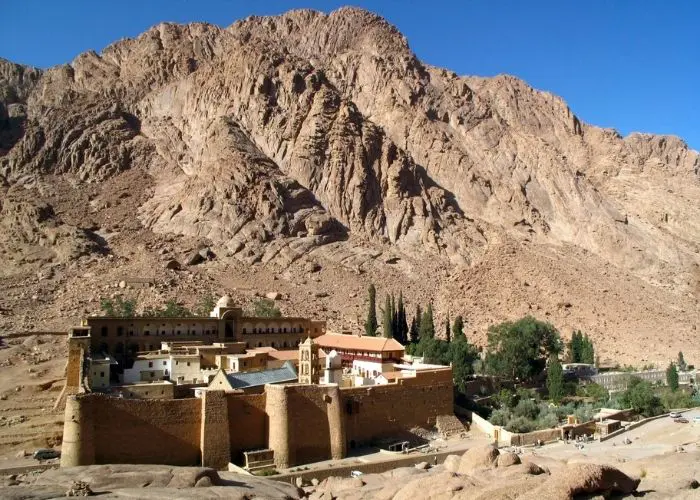
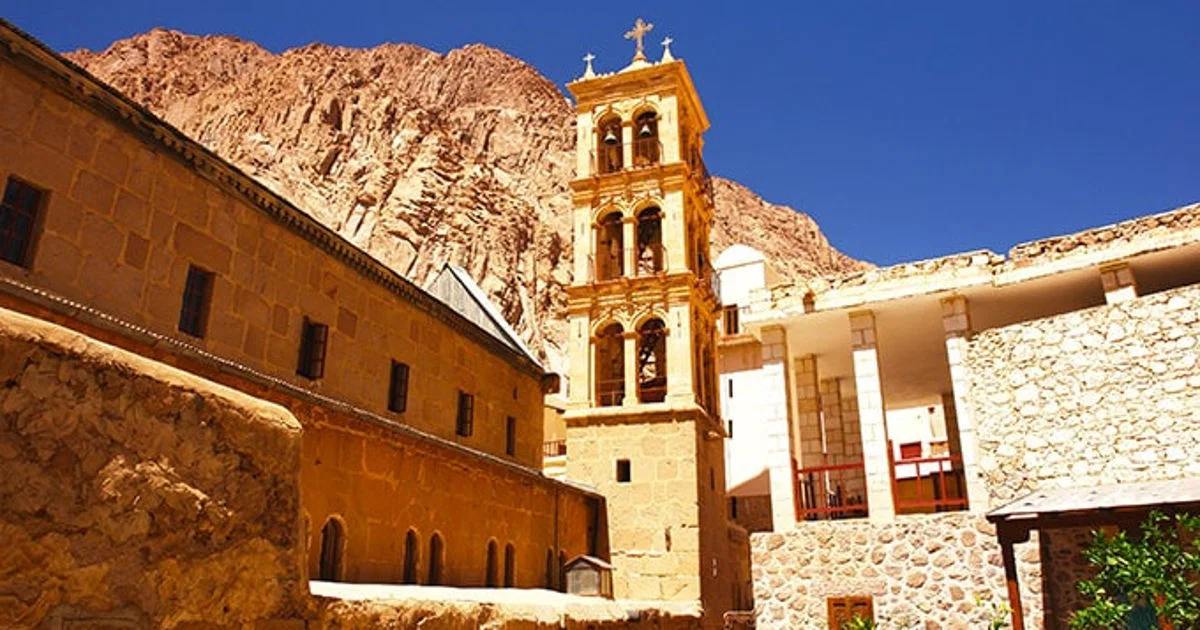
Sinai holds Justinian's most visible legacy in Egypt. Saint Catherine's Monastery, at the foot of Mount Sinai, was built under his patronage in the sixth century, with massive granite walls and a basilica that still stands. It ranks among the oldest Christian monasteries in continuous use, and its library is renowned for early manuscripts.

Plague, War and Decline

In 541, the outbreak now called the Plague of Justinian reached the Egyptian port of Pelusium, according to Procopius, and spread along trade routes to Constantinople and beyond. Population losses, costly wars and religious tension weakened the empire's grip. Persian forces occupied Egypt around 619, Emperor Heraclius recovered it in 628, and Arab forces took Alexandria in 641 or 642.

Tracing Justinian's Egypt Today

Visitors can follow this history on the ground. In Alexandria, the late antique lecture halls at Kom el-Dikka and the collections of the Graeco-Roman Museum show city life in this era. The guide to Greek and Roman heritage in Alexandria explains the layers beneath the modern city, and things to do in Alexandria helps fit these sites into a wider itinerary. Philae and Saint Catherine's lie further afield, near Aswan and in Sinai respectively.

Alexandria is the easiest place to start. How to get from Cairo to Alexandria covers trains, buses and drives, and the Cairo to Alexandria day trip suits a tight schedule. Late antique sites reward context, and a guide who can explain how the Byzantine, Greek and Coptic layers fit together turns a quick walk into a real understanding of the city.

Aten Tours arranges guided visits in Alexandria and across Egypt for travellers who want history explained rather than simply displayed. Private itineraries can be built around Byzantine and Coptic heritage, from Alexandria's museums to Sinai. Ask the team to shape a route around this period.
Why Choose Aten Tours

Travel with confidence with Aten Tours, where local expertise meets exceptional service. From carefully curated itineraries and handpicked experiences to seamless planning and dedicated support, we create personalized journeys designed around what matters most—comfort, quality, and unforgettable experiences across Egypt and beyond.

Secure Online Payment

Enjoy safe and secure online payments with full protection of your personal and financial information. Book your trips with confidence anytime, anywhere.

Help & Support

Travel with confidence knowing that our Help & Support team is always here for you. From booking to your return, we’re just one message away.

Tailored Travel Experiences

Your journey, your way. We design tailored experiences that match your style, ensuring comfort, flexibility, and unforgettable moments in every destination.

Client Testimonials

At Aten Tours, we are proud to create experiences that leave lasting memories. Read genuine feedback from travelers who explored Egypt’s wonders, enjoyed luxury holidays, and discovered the world with confidence and ease.

Traveling solo in Egypt with Aten Tour was one of the best decisions I made. As a 22-year-old female traveler, I was a little nervous before arriving, but I felt safe and well looked after from day one. Everything was well organized, my guide was knowledgeable, kind, and always happy to help, and I never had to worry about a thing. The whole trip was smooth, enjoyable, and filled with unforgettable moments. I'm so glad I chose Aten Tour and would definitely travel with them again.

Sarah
Sarah May 2026

My fiancé and I booked a private 5-day tour of Egypt with Aten Tours, covering Cairo, Aswan, Abu Simbel, and Luxor. From the moment we arrived, everything was perfectly organized. The team took care of every detail, making our trip completely stress-free. Our guides were knowledgeable, friendly, and passionate about Egypt's history, and every destination exceeded our expectations. Even after returning home, we still find ourselves talking about this unforgettable experience. We highly recommend Aten Tours to anyone looking for a well-planned and memorable trip to Egypt.

Thomas
Thomas May 2026

Traveling with Aten Tour made our vacation completely stress-free. Every hotel, transfer, and excursion was exactly as promised, and the team was always available whenever we had a question. We really appreciated the personal attention and warm hospitality throughout the trip. We came home with unforgettable memories and would definitely recommend Aten Tour to anyone planning a trip to Egypt.

Olivia
Olivia April 2026

We booked an 8-day trip with Aten Tour, and it turned out to be one of our favorite vacations. Everything was well organized from start to finish, which made traveling around Egypt really easy. We never felt rushed, the hotels were great, and the team was always helpful whenever we needed anything. Egypt had been on our bucket list for a long time, and we're so glad we chose Aten Tour for this experience.

Nicholas
Nicholas July 2026

Our family booked a tour with Aten Tour after reading several positive reviews, and they definitely lived up to our expectations. Communication before the trip was quick and helpful, and everything during the tour was exactly as described. The hotels were comfortable, the transportation was smooth, and the guides made every stop interesting with their stories and local knowledge. Egypt had always been a dream destination for us, and this trip made it even more memorable.

Emma
Emma June 2026

All FAQ about Egypt

The monastery at the foot of Mount Sinai was built under his patronage in the sixth century. Its fortified granite walls and basilica remain in use today.

According to the historian Procopius, Justinian ordered the temples of Isis at Philae closed. The general Narses enforced the decision, and the temple was later turned into a church.

There is no record of a visit. Justinian ruled from Constantinople, while Egypt was run by an Augustal prefect in Alexandria, with bishops and generals carrying out imperial policy.

Was Egypt part of the Byzantine Empire under Justinian?
Yes. Egypt belonged to the Eastern Roman, or Byzantine, Empire from the late fourth century until the Persian occupation around 619, and again from 628 until the Arab conquest of 641 and 642.

94%
WhatsApp Call