
Ancient Egyptian Weapons: The Warrior's Arsenal Explained
From Stone to Bronze: How Egyptian Weapons Evolved
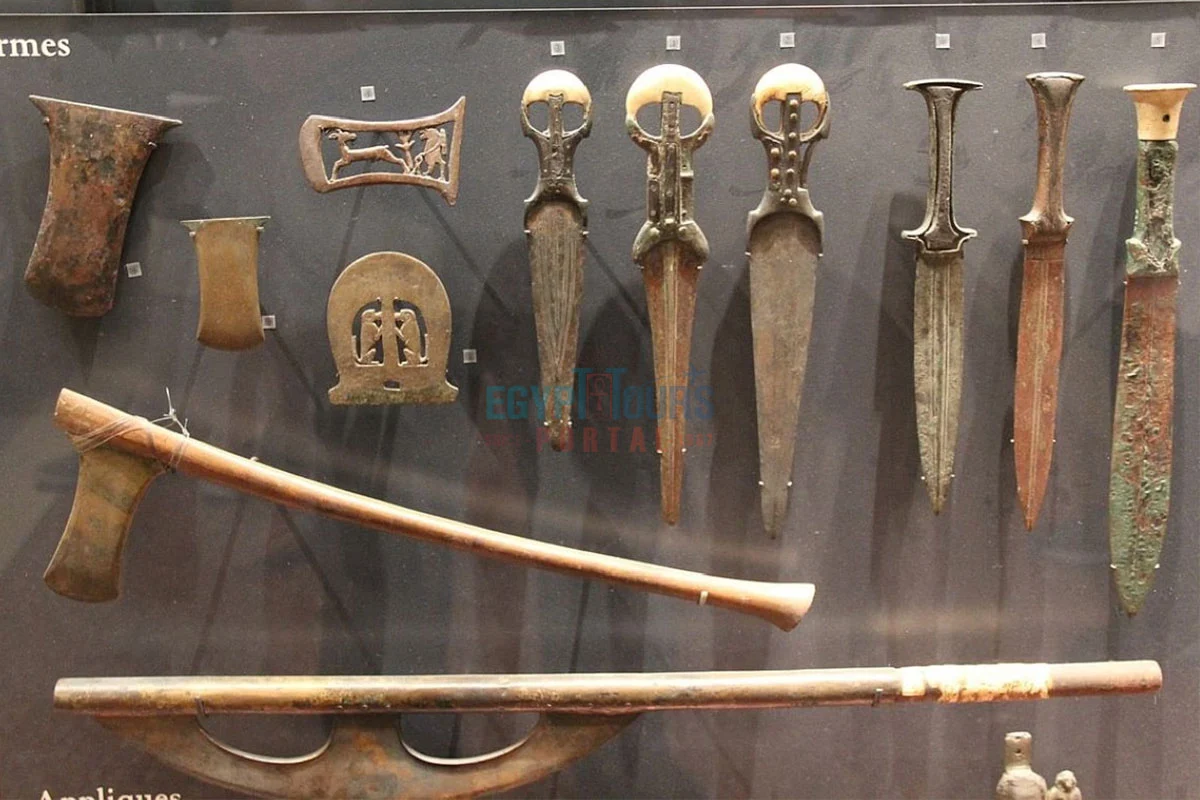
Early dynastic soldiers fought with flint knives, stone maceheads, and wooden clubs long before bronze reached the Nile Valley. By the Middle Kingdom, bronze casting changed the battlefield entirely, giving spear tips, axe blades, and dagger edges a sharpness that stone could never match. The shift took generations — stone-age tools and early bronze blades were carried side by side in the same units for years.
The Khopesh: Egypt's Signature Blade
No weapon says "ancient Egypt" quite like the khopesh, a curved sickle-sword adapted from Near Eastern designs during the New Kingdom. Its hooked blade worked less like a stabbing sword and more like an axe crossed with a hook, built to snag an opponent's shield or weapon before delivering a slashing blow. Temple reliefs across Egypt show pharaohs holding the khopesh as a symbol of authority as much as a real battlefield weapon.
Bows, Arrows, and the Composite Bow Revolution
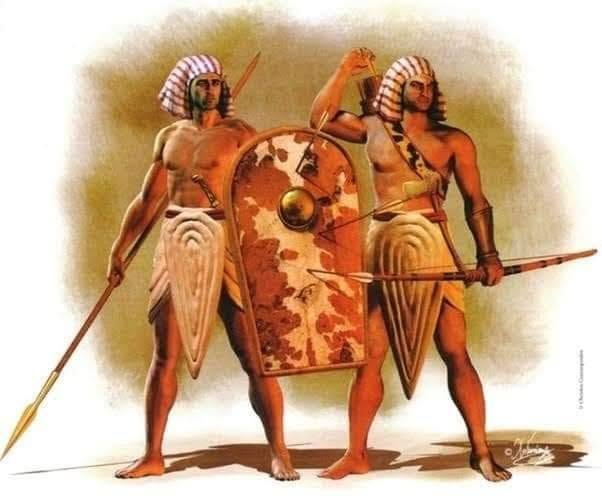
Egyptian archers used simple self-bows carved from a single piece of wood through most of the Old and Middle Kingdoms — effective, but limited in range and power. The composite bow, built from layered wood, horn, and sinew, arrived with the New Kingdom and gave Egyptian forces a serious edge, packing far greater draw strength into a shorter, more maneuverable frame. Arrowheads shifted too, moving from flint and bone points to cast bronze designed to punch through the leather armor worn by rival armies.
Chariots and the New Kingdom War Machine
The chariot arrived in Egypt from Western Asia around the seventeenth century BCE and reshaped how battles were fought. Light, two-wheeled, and pulled by a pair of horses, the Egyptian chariot carried a driver and an archer, letting units strike fast, pull back, and strike again before the enemy could close the distance. Tutankhamun's tomb held several chariots, and their gilded wood, leather harnessing, and spoked wheels show how much engineering went into a vehicle built purely for war.
Spears, Maces, and Close Combat
Away from the glamour of chariots and curved swords, most Egyptian infantry relied on simpler tools: wooden spears tipped with bronze or flint, and maces with pear-shaped or disc-shaped heads. The mace carried weight beyond the battlefield too — the "smiting scene," showing a pharaoh raising a mace over a kneeling enemy, appears on temple walls throughout Egypt as the standard image of royal power over chaos.
Where to See Ancient Egyptian Weapons Today
Genuine weapons from these periods survive in museum collections across Egypt, and Alexandria makes a convenient base for exploring them. Collections tracing Greek and Roman military influence in the city pair well with a closer look at Alexandria's Greek and Roman heritage, while jewelled ceremonial weapons and royal regalia rank among the standout pieces at the Royal Jewellery Museum. For a fuller day built around the city's ancient and royal history, a wider list of things to do in Alexandria shows how these sites fit into a complete itinerary.