The Cave Church in Cairo: Complete Visitor Guide
One of the most wonderful holy places in Egypt is the Cave Church in Cairo. Like, genuinely wonderful. Not "nice stained glass" wonderful. "Carved directly into a mountain" wonderful. Situated in Mokattam Hills in Cairo, it is also known as the Monastery of St. Simon the Tanner. And it is indeed a spiritual and historical visit. Like, genuinely both. You don't usually get those two together. Usually it's either "very spiritual but kind of boring" or "very historical but emotionally flat." This place? Somehow nails both.
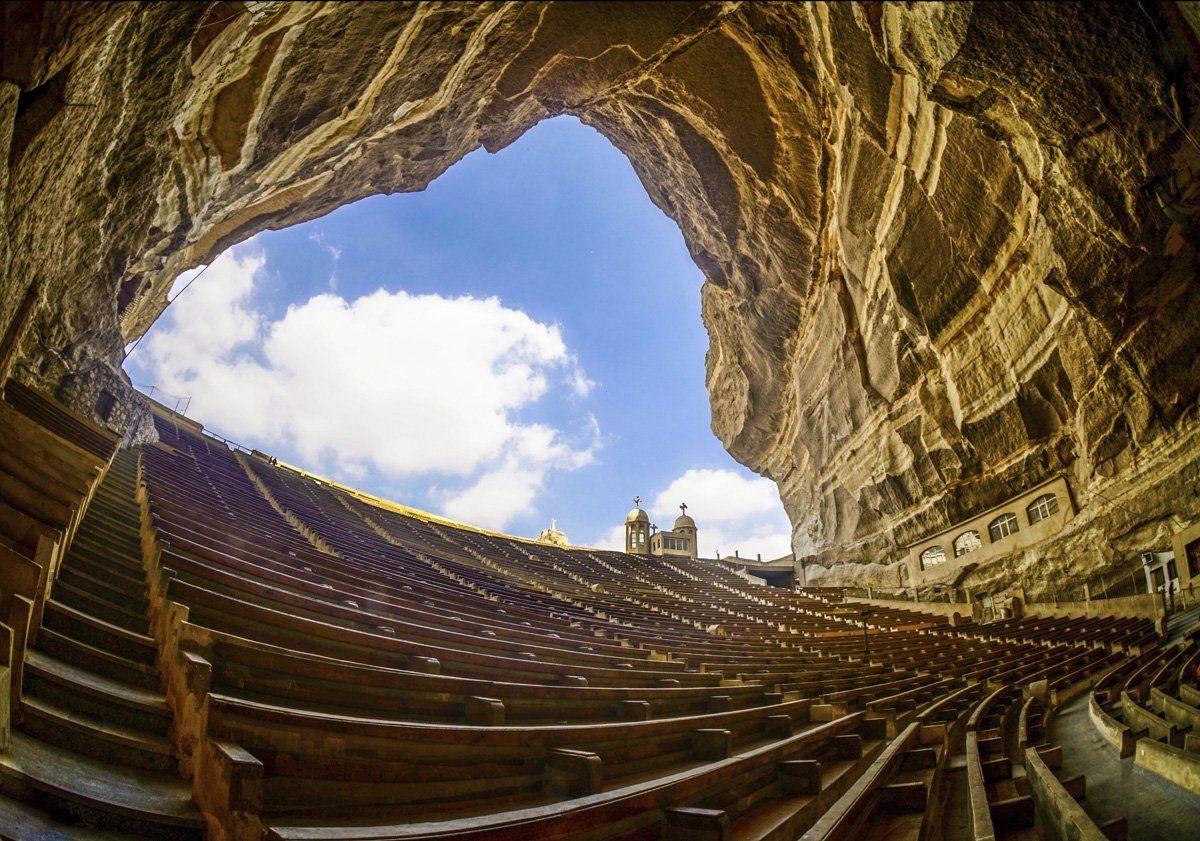
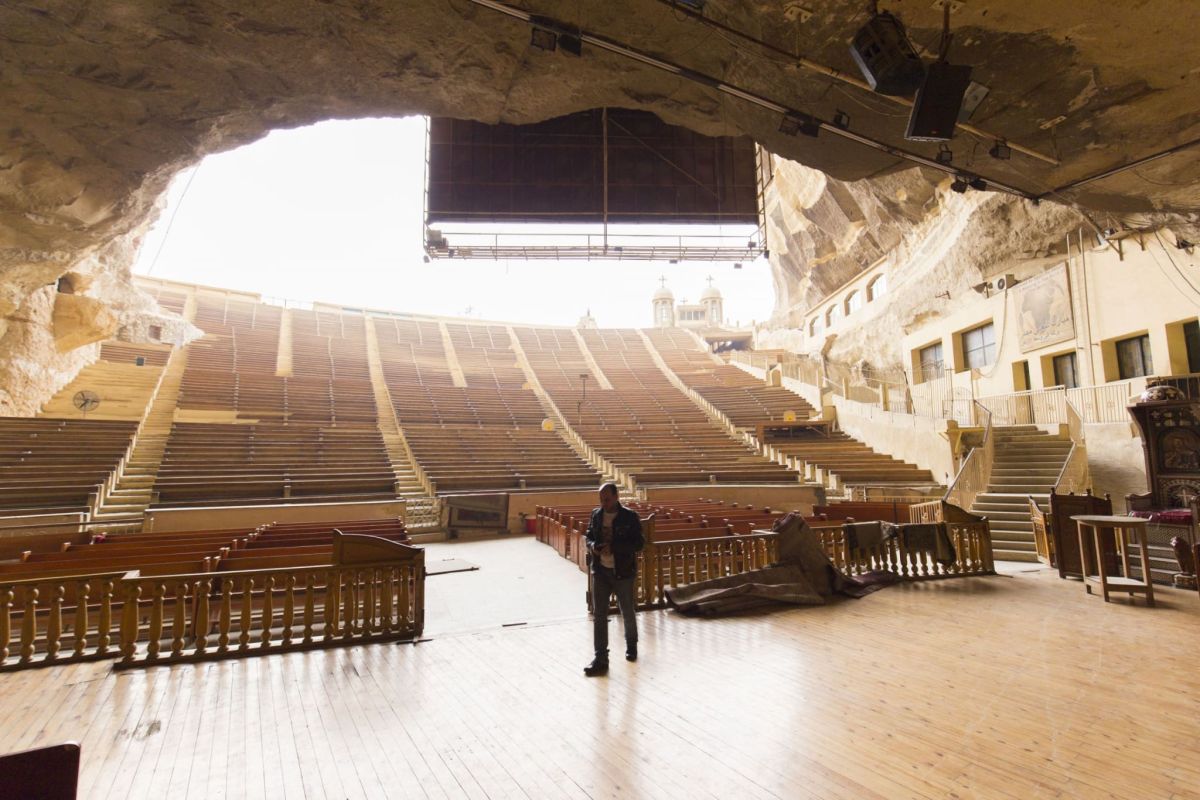
Tourists flock to the Cave Church in Cairo due to its amazing architecture. Carved into the rock. Its history. And its serene spiritual feeling. The kind of feeling that makes you whisper even though no one told you to. The architecture isn't built. It's excavated. Like, someone looked at a solid cliff face and said "yeah, we're gonna put a church in there." And they did. The main amphitheater seats 20,000 people. TWENTY THOUSAND. In a cave. Carved out of the mountain. Let THAT sink in.
The Cave Church in Cairo is considered a monument to faith and perseverance in the region. And a visitor will feel the history of Christian faith and heritage in Egypt. Along with a magnificent view of Cairo city. Like, genuinely magnificent. You stand at the entrance and suddenly you're looking down at this sprawling, chaotic, beautiful city. The contrast is jarring. In the best way. Down there: traffic, noise, millions of people living their lives. Up here: silence, incense, and a church carved into stone by people who believed so strongly that they literally moved a mountain. (Okay, they carved into it. But still.)
If you're booking a Cairo day tour or browsing Egypt travel packages, this place slots right in. Especially if you're doing an Egypt culture tour or a family tour to Cairo. Most Cairo sightseeing tours hit the pyramids, the museum, maybe the citadel. And those are incredible. LOVE them. But the Cave Church is different. It's not on the standard tourist circuit. You have to drive through Garbage City—yes, that's the actual name, and yes, it's exactly what it sounds like—to get here. And that drive? It's part of the experience. You see the Zabbaleen, the Christian garbage collectors who built this church with their own hands. Who still live here. Who still worship here. And suddenly the church isn't just architecture. It's a testament to a community that refused to be invisible.
History and Significance of the Cave Church
The story behind it is wild. St. Simon the Tanner was a Coptic saint who lived in the 10th century. Known for his humility and his miracles. The church is named after him, but the community built it much later. In the 1970s, when the Zabbaleen were marginalized and had nowhere to worship, they started carving. By hand. With basic tools. For years. Decades. And they didn't stop until they had the largest church in the Middle East. Carved into a mountain. By garbage collectors. If that doesn't move you, check your pulse.
The Zabbaleen are Coptic Christians who have been collecting and recycling Cairo's garbage for generations. They were pushed to the outskirts, to Mokattam, and told to basically deal with it. So they did. They built a community. They built homes. And then they built a cathedral. Not because they had money. Not because they had permission. Because they had faith. And time. And picks and shovels. The main church—St. Simon's Cathedral—was completed in the 1990s after years of backbreaking work. And it's not just one church. There are multiple chapels, meeting halls, a library, all carved into the same mountain. A whole complex. Underground. In stone.
This history is what makes the Cave Church different from every other tourist spot in Cairo. You're not just looking at old things. You're looking at living history. Still happening. The Zabbaleen still worship here. Still clean the city. Still carve new spaces when they need them. The church is their heart. Their identity. Their proof that they matter. And when you visit, you feel that. Whether you want to or not.
Architecture and Design
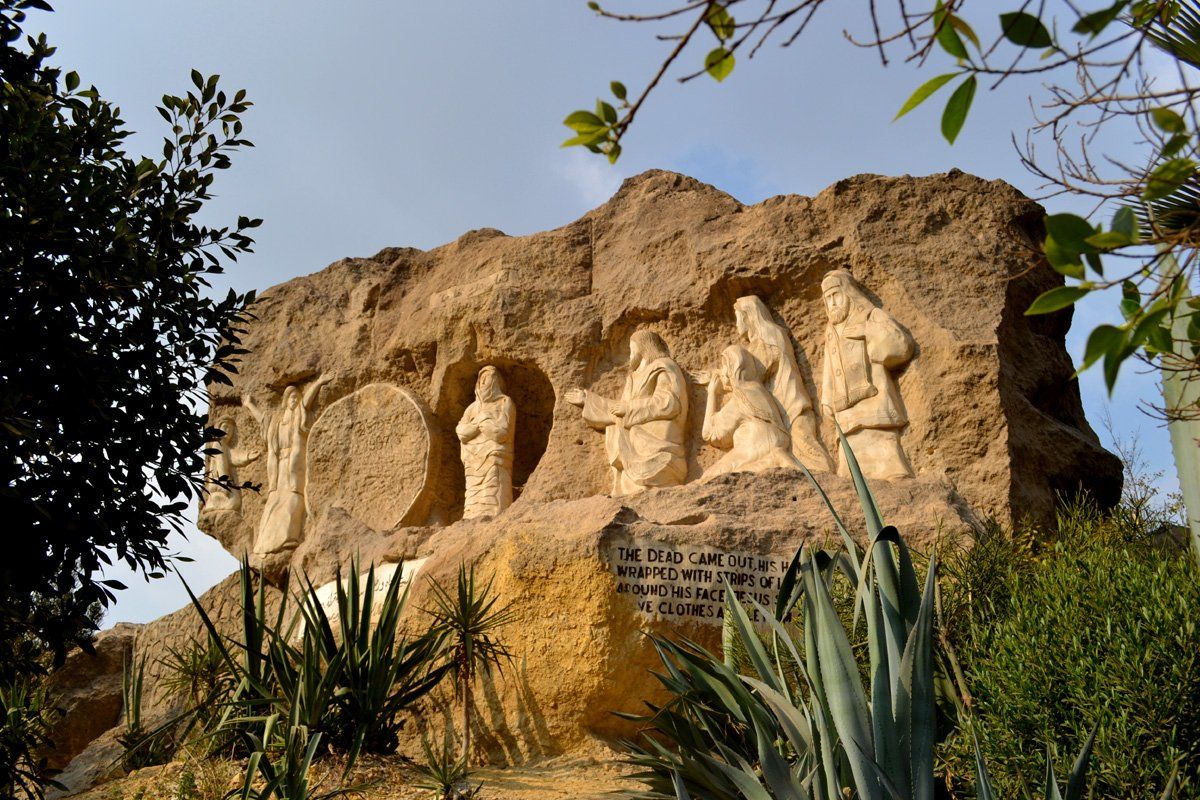
The main amphitheater is the showstopper. 20,000 seats arranged in a semicircle, all facing a central altar. The acoustics are unreal. A whisper from the altar carries to the back row. No microphones needed. The stone walls are carved with biblical scenes, Coptic crosses, geometric patterns. Not painted on. Carved INTO. So they can't fade. Can't peel. Can't be erased. They're part of the mountain now.
The ceiling soars above you, rough and natural in some places, smoothed and shaped in others. Light filters in from openings carved high in the walls. Strategic. Careful. So the space feels sacred without feeling dark. And the temperature? Always cool. Even in August, when Cairo is a furnace, the Cave Church is comfortable. The mountain keeps it that way. Natural air conditioning. Millions of years in the making.
There are smaller chapels too. More intimate spaces for private prayer. One of them is dedicated to the Virgin Mary. Another to St. George. Each has its own character. Its own carvings. Its own silence. You can wander between them for hours and still find new details. A cross you missed. A face in the stone. A phrase in Coptic that you can't read but somehow understand.
Visiting the Cave Church: Practical Tips
Getting there is an adventure. You'll drive through Manshiyat Naser—Garbage City—to reach the entrance. The road is narrow, winding, and lined with... well, garbage. Being sorted. Being recycled. Being turned into something useful. It's not pretty. But it's honest. And it makes the church at the top feel even more miraculous. Like an oasis that shouldn't exist but does.
Wear comfortable shoes. The ground is uneven. The stairs are steep. And you'll want to explore every corner. Bring a scarf or shawl to cover your shoulders. This is still a working church. People are praying. Show respect. Photography is generally allowed in the main areas, but ask before snapping during a service. And don't use flash. Ever. The natural light is part of the magic. Don't ruin it.
Best time to visit? Morning. Early morning. Before the heat builds. Before the crowds arrive. The light hitting the stone at that angle? Unreal. You'll take approximately 400 photos and keep all of them. Because deleting any feels wrong.
If you're building out a tailor-made trip or browsing Egypt travel packages, do NOT sleep on this. Whether you're dragging the family on an Egypt family tour, doing a quick 5-day Cairo and Luxor trip, or just exploring on your own, the Cave Church delivers. ALL of it. History, spirituality, architecture, and that rare feeling of being somewhere that matters. Like, genuinely matters.
i've talked to people who've done the 8-day Cairo, Luxor & Aswan tour, the Nile cruises, the whole nine yards. And they loved those too. But the Cave Church? different. It's for the people who want to feel the pulse of real Cairo. The hidden pulse. Not the tourist version. The version where a community built a cathedral out of garbage and faith.
So. Bottom line? You want history. You want culture. You want to stand in a cave that 20,000 people call their church and feel like you're part of something bigger than a vacation. The Cave Church delivers. ALL of it. Skip the hotel pool for a morning, put on some modest clothes, and go experience one of the most remarkable churches on the planet. You won't regret taking a breather for this one. Seriously. you really won't.
History of The Cave Church in Cairo (St. Simon Monastery)
One of the most impressive and iconic places of religious significance in Egypt is the cave church in Cairo. Or St. Simon the Tanner monastery, if you want the full name. The church is situated in the Mokattam Hills. Holds great significance for the history of the Zabbaleen. The group of garbage collectors that have been residing there for many years. Like, generations. Not "a few years." Generations. These families have been collecting and recycling Cairo's garbage since before most of us were born. And they built this church. With their hands. While doing that. Wild.
The church started as a project in the 1970s. When the rapidly expanding Christian population in Mokattam was in need of a large place of worship. An idea emerged that the natural caves inside the mountains should be used as a place of prayer. This idea later grew into the massive complex of rooms and halls. Like, MASSIVE. We're not talking "a small chapel in a cave." We're talking multiple halls, meeting rooms, a library, all carved into the same mountain. Over decades. By people who had no architectural training. Just faith. And picks. And time.
One of the key aspects of this story is how this was built through the sheer effort of the local community. And it has now become a symbol of faith and unity. As one of the most fascinating churches in the world. Like, genuinely fascinating. Not "interesting for a church" fascinating. "People write books about this" fascinating. Because it's not just the architecture. It's the story. The community. The refusal to be invisible in a city that tried to push them to the margins.
If you're booking a Cairo day tour or browsing Egypt travel packages, this place slots right in. Especially if you're doing an Egypt culture tour or a family tour to Cairo. Most Cairo sightseeing tours hit the pyramids, the museum, maybe the citadel. And those are incredible. LOVE them. But the Cave Church is different. It's not on the standard tourist circuit. You have to drive through Garbage City—yes, that's the actual name, and yes, it's exactly what it sounds like—to get here. And that drive? It's part of the experience. You see the Zabbaleen, the Christian garbage collectors who built this church with their own hands. Who still live here. Who still worship here. And suddenly the church isn't just architecture. It's a testament to a community that refused to be invisible.
Architecture and the distinctive design of The Cave Church
The architecture of The Cave Church is what attracts a lot of visitors. And is a big reason for people flying from all over the world. Unlike any typical churches which are built above the ground, the Cave Church is completely built inside the mountain stone. Creating a harmony between the natural and the man-made art. Like, genuinely harmonious. Not "they tried to make it look natural" harmonious. "They literally carved into existing caves and made them MORE beautiful" harmonious.
There are huge halls inside the church that can contain thousands of worshippers. These halls are shaped within the rocks, creating an immense natural atmosphere inside the church. They are adorned with religious carvings depicting biblical stories. Carefully carved within the walls and illustrating astonishing artistic detail. The Last Supper. The Nativity. Scenes from the life of St. Simon. All etched into stone that is millions of years old. By people who learned to carve as they went. Because someone had to do it. And they did.
Perhaps one of the most special features of the Cave Church is that it does not alter the natural surroundings. The shape of the mountain rock was kept. And an immense spiritual, yet quite serene atmosphere was created. Unlike any modern structure in Cairo. Like, genuinely unlike anything else. Cairo is concrete and glass and noise. This is stone and silence and shadow. The contrast is jarring. In the best way possible.
As it combines natural rocks along with amazing religious artwork, it is also considered to be one of the largest and most distinctive cave churches in the Middle East. And an impressive piece of architecture in Egypt. Like, genuinely impressive. Not "impressive for a church built by amateurs" impressive. "Impressive by any standard" impressive. The main amphitheater seats 20,000. TWENTY THOUSAND. In a cave. Let THAT sink in.
What to Expect When Visiting the Cave Church in Cairo
Visiting the cave church is one of the most moving experiences. Offering the visitor the opportunity to have an experience of peace and contemplation. From the moment you enter the cave, you will find yourself surrounded by a tranquil ambiance. That you would never imagine exists just a world away from the streets of busy Cairo. Like, genuinely. The noise of the city just... disappears. Replaced by cool stone, filtered light, and the faint smell of incense. It's not just quiet. It's a different kind of quiet. The kind that makes you whisper even though no one told you to.
Inside the Cave Church, the visitor will have the chance to explore its immense chambers and prayer rooms. And marvel at the wonderful rock-cut architecture it presents. The cavern feels open and accessible. And it is fairly frequent for tourists and locals to find themselves exploring the cave church together. Not awkwardly. Not in that "we're sharing space but pretending each other doesn't exist" way. More like... communal. Shared wonder. Because everyone is looking at the same impossible thing and thinking "how did people DO this?"
It's open all day and doesn't cost anything to visit. But please be mindful that this is a holy site. So try to be quiet with your conversations and wear suitable clothes. Cover your shoulders. Wear something modest. This isn't a museum. It's a church. Where people pray. Where they baptize their children. Where they bury their dead. Show respect. It's not complicated.
It makes for some incredible photos. And photos are allowed. But you have to appreciate the Cave church for more than just what it looks like. It's significant in many ways. Like, genuinely significant. The story behind it. The community that built it. The faith that sustained it. That's the real photo. The one you take with your memory, not your phone.
The Best Ways of Getting to the Cave Church in Mokattam
The Cave Church is located in the Mokattam Hills on the eastern side of the city. And is readily accessible from most areas in the city centre. The easiest way to reach the Church is by either a taxi or one of the ubiquitous ride-hailing apps that are common throughout Cairo. Uber or Careem. Depending on the traffic conditions, the journey from the city centre can take anywhere between 20 and 40 minutes. Which in Cairo traffic? Could be an hour. Could be two. Plan accordingly, but you have too check with the driver if its okay for him to go their because the way to the church is so bad for the car suspention so you need to ask the driver
As you drive to Mokattam the road begins to climb. And you have panoramic views of the city of Cairo spread below. Driving through the Cairo Coptic region is a very significant and enjoyable part of coming here. Affords wonderful views of Cairo. Like, genuinely wonderful. You'll want to stop the car just to stare. The city spreads out beneath you, all that chaos and noise and life, and you're above it. Looking down at it. About to enter a church carved into a mountain. The contrast is unreal.
Once in Mokattam, the signs and directions from local people will be evident to lead you to the specific location of the church itself. This is a well-known landmark. So generally any local taxi driver will know where it is. Though "knowing where it is" and "being willing to drive through Garbage City" are different things. Some drivers might hesitate. Be patient. Tip well. It's worth it.
The best time to visit is during daylight. So you can navigate the terrain and get around to explore the surrounding area more effectively. And experience the panoramic views to their full extent. Night visits are possible. But you miss the views. And the views are half the point.
Best Time to Visit the Cave Church in Cairo
The best time to visit The Cave Church would be in the mornings or late afternoons. This is because the weather during these times is more favorable. And it will also add to the splendor of the rock-cut interiors as a result of the natural light in the church. The way the light hits the stone at certain angles? Unreal. Golds and ambers and deep shadows. You'll take approximately 500 photos and keep all of them. Because deleting any feels wrong.
The time between October and April is considered to be the best time to visit Cairo in general. In this period of time, the temperature is less harsh. And it will be easier to move around Mokattam. Summer in Cairo? Brutal. Like, genuinely brutal. 40+ degrees. And the Cave Church is cooler than outside, sure. But still. Why suffer if you don't have to?
Weekdays are best recommended to those who want a more calm and peaceful visit. In weekdays, there is usually less number of tourists. Allowing them to have the best of their experience while enjoying the serene ambiance of the church. Weekends can get busy. Especially Sunday, for obvious reasons. If you want that "alone with the mountain" feeling? Go Tuesday morning. Early. You'll basically have the place to yourself.
Another extremely beautiful part of the day for visiting the church is at sunset. The view from Mokattam is extraordinary at sunset. And offers an impressive view over Cairo at the time of sunset. The city turns gold. The minarets catch the light. The Nile glints in the distance. And you're standing in a church carved into a mountain, watching it all. Like... how is this even real?
If you're building out a tailor-made trip or browsing Egypt travel packages, do NOT sleep on this. Whether you're dragging the family on an Egypt family tour, doing a quick 5-day Cairo and Luxor trip, or just exploring on your own, the Cave Church delivers. ALL of it. History, spirituality, architecture, and that rare feeling of being somewhere that matters. Like, genuinely matters.
So. Bottom line? You want history. You want culture. You want to stand in a cave that 20,000 people call their church and feel like you're part of something bigger than a vacation. The Cave Church delivers. ALL of it. Skip the hotel pool for a morning, put on some modest clothes, and go experience one of the most remarkable churches on the planet. You won't regret taking a breather for this one. Seriously. you really won't.
Explore Coptic and Islamic Cairo Tour and discover the Citadel of Saladin, Mohamed Ali Mosque, Hanging Church, and Khan El Khalili Bazaar in a full-day Cairo sightseeing experience.
Egypt has an exceptional civilization that attracts tourists from all over the world to come to explore it while experiencing the charming museums and buildings that are spread everywhere in Egypt
Egypt has one of the oldest and most magical civilization and attracting many tourists all over the world to witness its forever secrets. Legend Egypt tours offer you the best custom designed 4 Days Cairo Cultural tour, as it is one of the most recommending Egypt Cultural Tours and Short Cairo Tour packages for low duration holiday or having short trip on a layover. This is one of the Best Egypt tours to enjoy history and culture on a short trip.
Choose Legend Travel for unforgettable journeys, carefully curated itineraries, and premium travel experiences. We combine local expertise with world-class service to make every trip exceptional.
Secure Online Payment
Enjoy safe and secure online payments with full protection of your personal and financial information. Book your trips with confidence anytime, anywhere.
Help & Support
Travel with confidence knowing that our Help & Support team is always here for you. From booking to your return, we’re just one message away.
Tailored Travel Experiences
Your journey, your way. We design tailored experiences that match your style, ensuring comfort, flexibility, and unforgettable moments in every destination.
Client Testimonials
At Legend Travel, we are proud to create experiences that leave lasting memories. Read genuine feedback from travelers who explored Egypt’s wonders, enjoyed luxury holidays, and discovered the world with confidence and ease.
Anet A
14-05-2026
I had an absolutely exceptional experience in Egypt with Legend Egypt Tours, and I cannot recommend them enough especially my guide,. From start to finish, everything was seamless, organized, and beyond my expectations.
As a 22-year-old female solo traveler, safety, comfort, and trust were extremely important to me, and exceeded all of that in every way. He was amicable, professional, knowledgeable, and incredibly kind, making me feel completely at ease throughout the entire experience. His attention to detail and genuine care made traveling through Egypt not only smooth, but truly unforgettable.
What truly sets apart is how thoughtful and attentive he is. He anticipated needs before I even had to ask, made sure I was comfortable at all times, and created an experience that felt both personal and special. Thanks to him, my first solo trip to Egypt felt empowering, safe, and deeply meaningful.
If you’re considering traveling to Egypt, Legend Egypt Tours and are the gold standard. This wasn’t just a tour, it was a once in a lifetime experience that I will cherish forever. I would choose them again without hesitation and recommend them to anyone traveling to Egypt.
Thomas
25-04-2023
My fiancé and I booked a private 5 day tour of Egypt with ETP starting in Cairo followed by Aswan, Abu Simbel and Luxor. We just got home and continue to talk
Thomas
22-04-2023
My fiancé and I booked a private 5 day tour of Egypt with ETP starting in Cairo followed by Aswan, Abu Simbel and Luxor. We just got home and continue to talk
Thomas
21-04-2023
My fiancé and I booked a private 5 day tour of Egypt with ETP starting in Cairo followed by Aswan, Abu Simbel and Luxor. We just got home and continue to talk
Thomas
19-04-2023
My fiancé and I booked a private 5 day tour of Egypt with ETP starting in Cairo followed by Aswan, Abu Simbel and Luxor. We just got home and continue to talk
All FAQ about Egypt
All FAQ about Egypt
You can easily book through our website or contact our team directly for personalized assistance and trip planning.
Yes, all our trips can be fully customized based on your interests, schedule, and budget to ensure a personalized travel experience.
We provide a wide range of travel services including private trips, cultural experiences, luxury holidays, and customized travel planning across Egypt and beyond.
Yes, we use secure payment systems to ensure that all transactions are safe and protected.
 English