Luxor Temple at Night
Luxor Temple at Night: A Simple Evening Guide
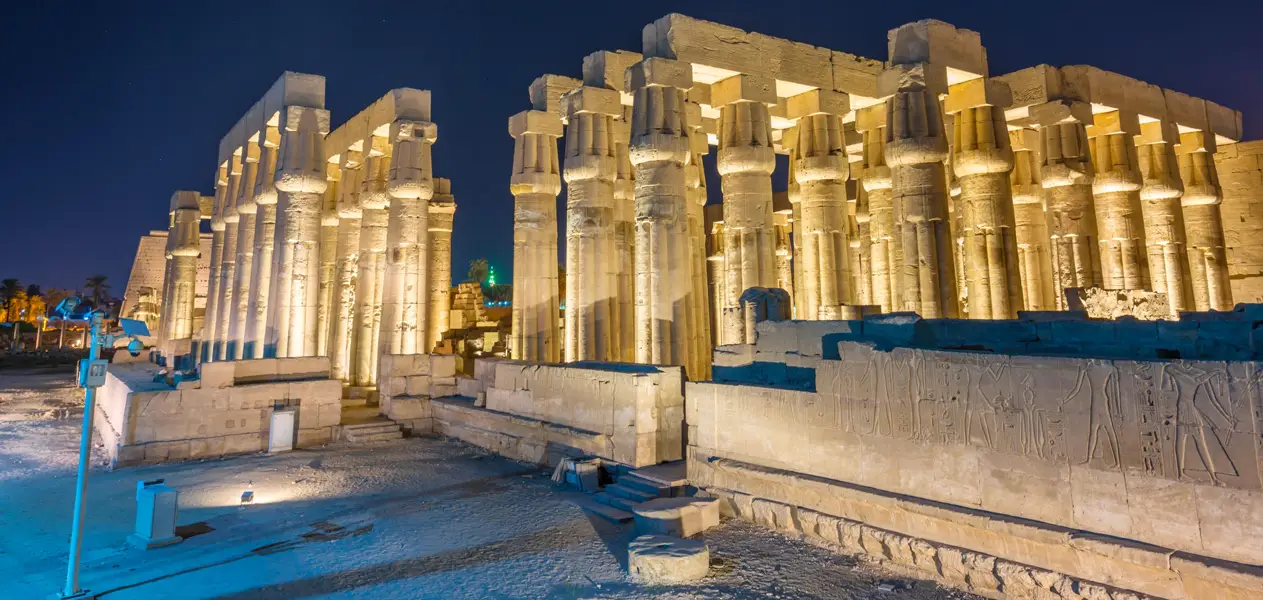
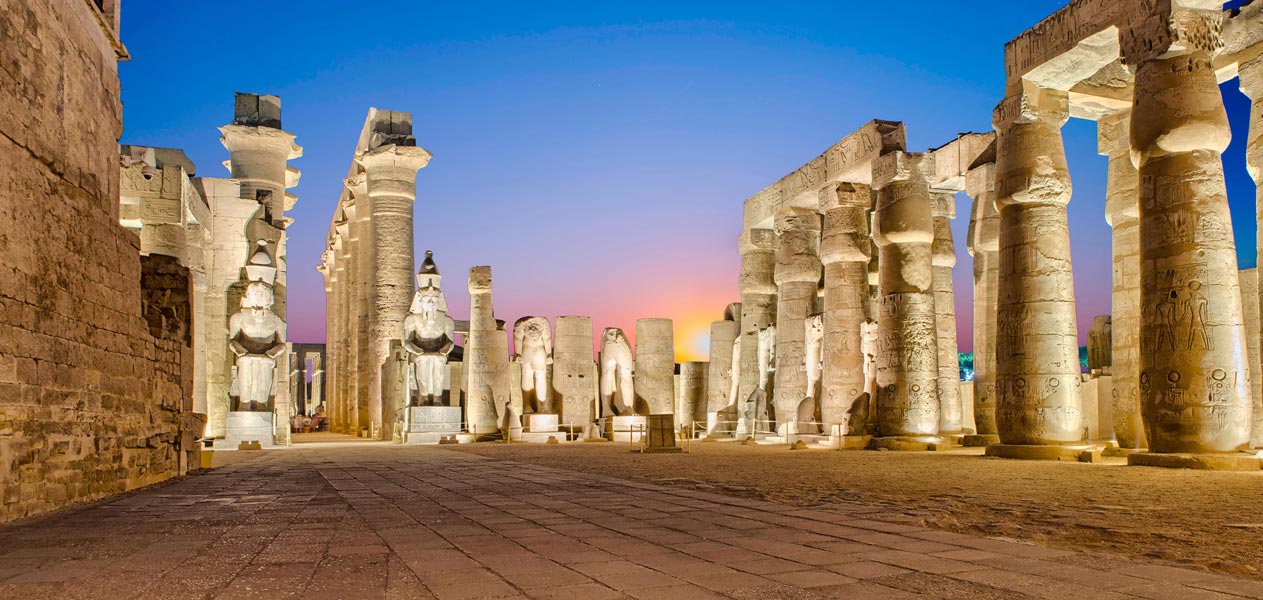
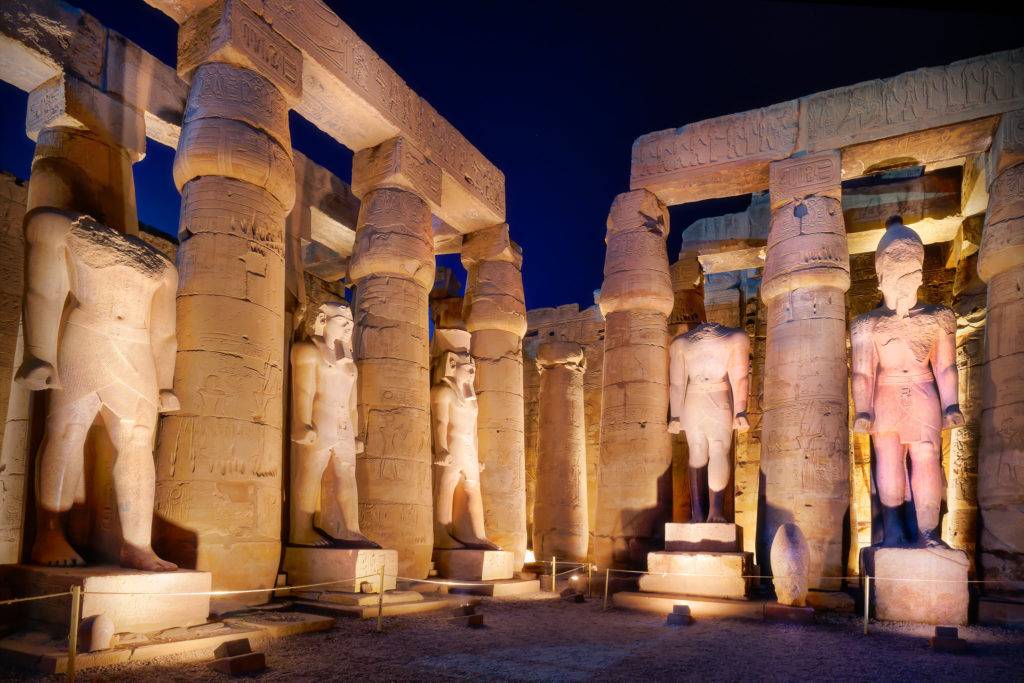
Luxor Temple is beautiful during the day, but at night it feels completely different. After sunset, the air becomes cooler, the strong sunlight disappears, and the temple begins to glow under warm lights. The statues, columns, walls, and gateways look more dramatic in the dark, making the visit feel calm and special.
Many visitors choose to see Luxor Temple in the evening after spending the day at Karnak Temple, the Valley of the Kings, or other famous sites around Luxor. This is a good idea because the evening is usually more comfortable, especially during the hot months. The temple is easy to walk around, and the lighting makes it a great place for photos.
A night visit is not only about seeing an ancient monument. It is also about enjoying the atmosphere. Each part appears slowly in the light. You do not see everything at once. Instead, you move from one beautiful scene to another.
Luxor Temple in the City Center
One of the best things about Luxor Temple is its location. It stands in the middle of modern Luxor, close to the Nile Corniche, hotels, restaurants, cafés, shops, and busy streets. This makes it very easy to visit, even if you only have a short time in the city.
Unlike some temples that are far from city life, Luxor Temple is surrounded by modern activity. While you are walking inside the ancient site, you may still hear cars, people talking, or music from nearby streets. This creates an interesting mix between the old and the new.
At night, this mix becomes even more beautiful. The temple shines with golden light, while the lights of the city can be seen around it. You can feel that Ancient Thebes and modern Luxor are connected in the same place. This is one reason why Luxor Temple feels so alive.
The Main Entrance
Most visitors enter Luxor Temple from the northern side. This entrance is one of the most impressive parts of the site. It was built by Ramesses II, one of the most famous kings of ancient Egypt.
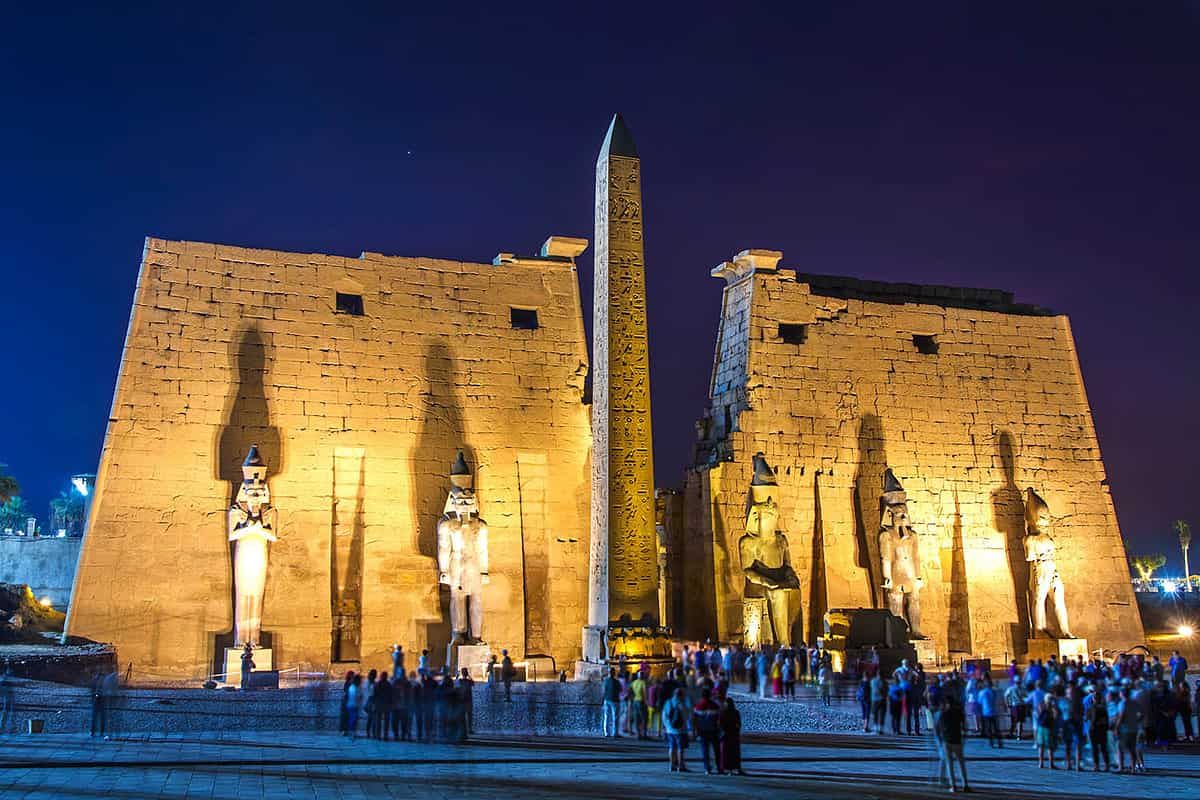
At the entrance, you will see a huge stone pylon, large statues of Ramesses II, and one standing obelisk. In ancient times, there were two obelisks here. The other one was taken to France in the nineteenth century and now stands in Paris.
At night, the entrance looks very powerful. The lights show the size of the pylon and the details of the statues. This is a great place to stop, take photos, and enjoy the first view of the temple.
The Court of Ramesses II
After passing through the entrance, you arrive at the Court of Ramesses II. This is a large open courtyard with columns and statues. In the evening, the space feels peaceful and grand at the same time.
The lights make the columns stand out, while some areas remain in shadow. This gives the courtyard a quiet and dramatic feeling. It is a good place to walk slowly and look around.
One of the most interesting things in this court is the Mosque of Abu Haggag. The mosque stands above part of the ancient temple. This may seem unusual, but it shows the long history of the site.
Over many centuries, parts of Luxor Temple were covered by soil and later buildings. When the ancient temple was uncovered, the mosque stayed in its place. It is still used today. This makes Luxor Temple special because it is not only an ancient Egyptian site. It also has Islamic history, Roman history, and Christian traces.
The Great Colonnade
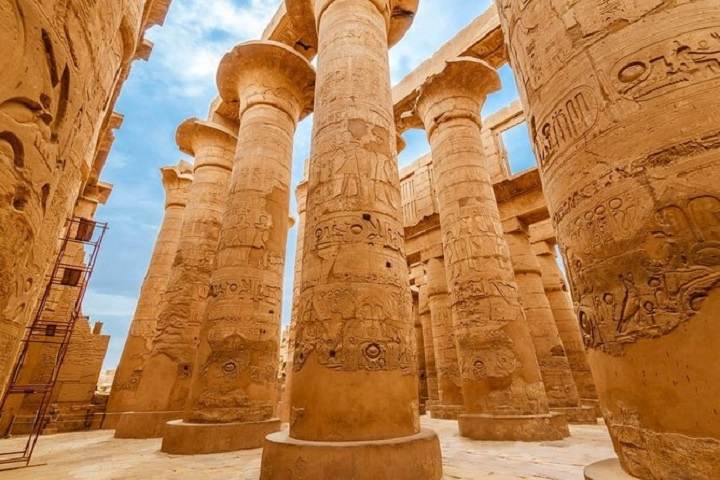
From the Court of Ramesses II, the path continues into the great colonnade. This is one of the most beautiful parts of Luxor Temple. Tall columns stand on both sides of the walkway and guide visitors deeper into the temple.
During the day, the columns look huge and impressive. At night, they look even more dramatic. The lights shine on the stone, while the spaces between the columns become dark.
Walking through the colonnade after sunset feels very special. The city seems farther away, and the temple becomes quieter. The tall columns make you feel the power and importance of the ancient place.
The Court of Amenhotep III
After the colonnade, you reach the Court of Amenhotep III. This area is another important part of the temple. It is surrounded by columns and leads toward the inner rooms.
Amenhotep III built much of Luxor Temple, and later kings added more sections. This is why the temple has different styles and details from different periods.
The inner rooms were once used for religious ceremonies. Today, visitors can walk through these areas and see walls, doorways, and decorations from different times. Some parts still show ancient Egyptian carvings. Other parts show changes made by Romans and early Christians.
At night, these rooms can feel quiet and mysterious. However, small carvings may be harder to see in the dark. If you want to study the details, it is better to arrive before sunset. This way, you can see the reliefs in daylight and then enjoy the temple lights after dark.
Why Luxor Temple Was Important
Luxor Temple was one of the most important temples in Ancient Thebes. It was connected to religion, kingship, and the power of the pharaoh.One of the most important events connected with the temple was the Opet Festival. During this festival, sacred statues of the gods were carried from Karnak Temple to Luxor Temple. This procession joined the two temples together and showed the close relationship between the gods, the king, and the city.
The Avenue of Sphinxes was part of this sacred route. Today, restored parts of the avenue help visitors imagine how Karnak Temple and Luxor Temple were connected in ancient times.
Best Time to Visit
The best time to visit Luxor Temple is usually late afternoon or evening. If you arrive before sunset, you can see the carvings and details in natural light. Then you can stay as the temple lights turn on and the atmosphere changes.
A visit after dark is also a good choice, especially in summer. The weather is cooler, and the temple looks beautiful under the lights. But if you are very interested in inscriptions and small details, try to include some daylight in your visit.
.jpg "Giza Pyramids")