Antoniades Gardens: Alexandria's Forgotten Historic Estate
What Are Antoniades Gardens?
Most visitors to Alexandria never hear the name. Antoniades Gardens sit in the Bahari district, well off the tourist track, and they're the remains of one of the city's grandest private estates: a park built around a small Italian-style palace by a wealthy Greek family, with statues, fountains, and some of the oldest trees in the city.
Today it's a public garden, and it's seen better decades. The place carries a strange double character. On one hand, it's a genuine piece of Alexandria's golden-age history, the kind of estate that defined the city a century ago. On the other hand, it's faded, half-kept, and almost always empty. Whether that decay bothers you or moves you decides how the visit goes.
The History: From Greek Merchant Estate to Public Garden
The estate was created by the Antoniades family, Greek merchants who made their fortune in Alexandria during its cosmopolitan era, the same community behind the Cavafy apartment and the synagogues and the marble facades downtown. Their garden became famous in its own right. In 1911, it hosted the Alexandria International Agricultural and Industrial Fair, a major event for the region at the time, and the Italian-style palace on the grounds was built around that era to receive dignitaries.
The story took a familiar turn, the one you'll recognize from the Cavafy Museum and the Jewish quarter. The Greek community left in the mid-twentieth century, and the estate passed to the state. The gardens stayed open to the public, the palace stayed standing, and the maintenance, well, the maintenance tells its own story.
What You'll Actually See
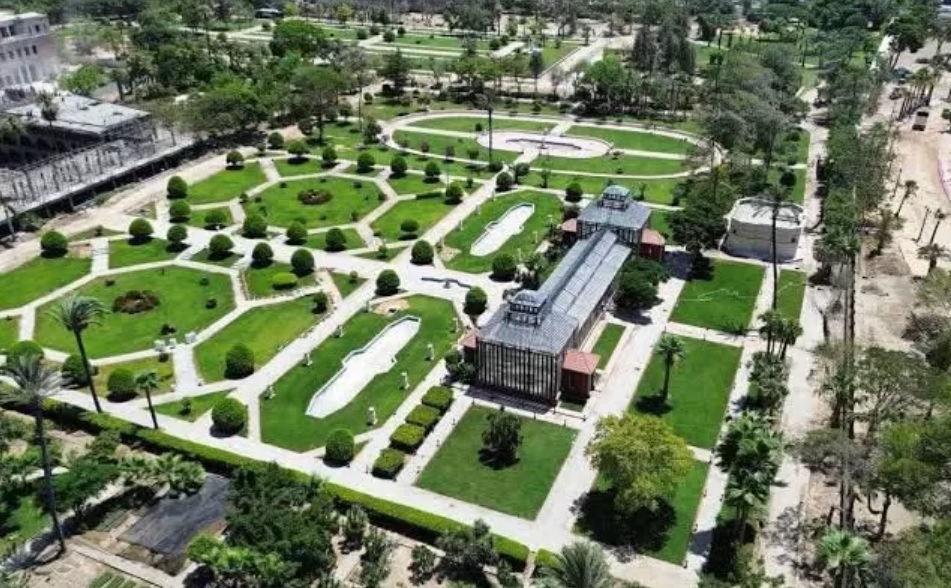
The palace comes first: a two-story Italianate building with arched windows, decorative stonework, and a facade that photographs beautifully from certain angles and sadly from others. It's usually closed, sometimes used for occasional official events, and never open for regular touring.
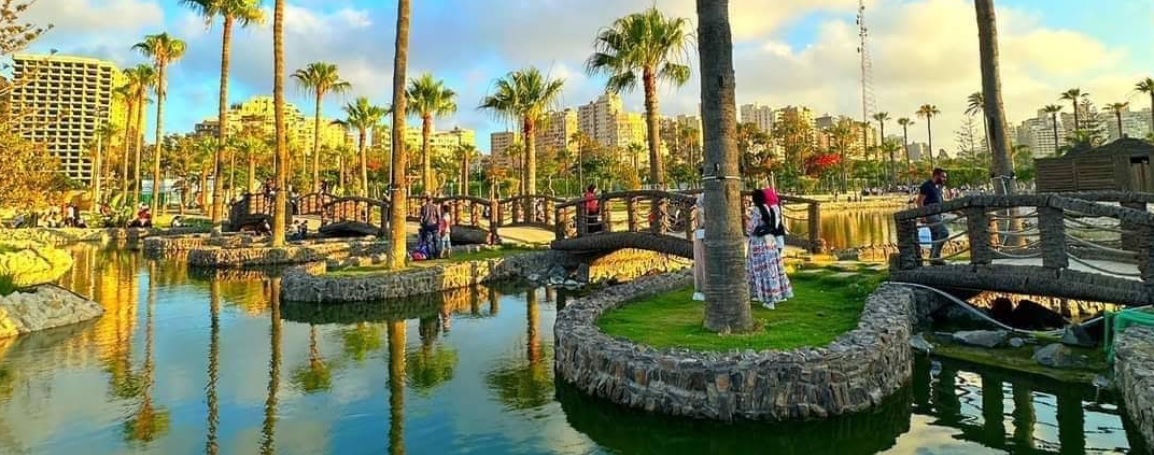
The gardens around it spread out with old, mature trees, the kind that take a century to grow and give the park its main appeal now. Statues from the estate's era still stand along the paths, some original, some replicas replacing damaged pieces. There are fountains, mostly dry. Wide avenues where the Alexandria International Fair once ran its pavilions.
And there's the atmosphere, which is the real draw. These gardens are quiet in a way central Alexandria never is. You'll share the place with a handful of locals, maybe a wedding photo session, occasionally nobody at all.
The Honest Condition: Beauty and Decay
Here's the part most articles won't tell you straight: the gardens are run down. Fountains don't run, some paths are cracked, a few structures look abandoned, and the overall maintenance level sits well below Montaza or Shallalat.
But that's also what gives the place its character. This is faded grandeur you can actually stand inside. The palace isn't roped off behind glass in a museum; it's just there, aging in a public park, with local kids playing nearby. For travelers who like their history a little rough around the edges, this is more interesting than a polished attraction. For anyone who needs things to be well-kept, it will read as sad, and both reactions are legitimate.
Visiting Practicalities
The gardens sit in the Bahari district, in the western part of the city, not far from the Alexandria Zoo, which makes them an easy pairing.
Hours and Entry: The gardens open during daytime hours, and entry costs a small fee or is occasionally free, the policy shifting now and then like most Alexandria parks.
How Long: Thirty to forty-five minutes covers the grounds. Photographers stretch it longer, especially around the palace facade.
Getting There: A taxi from downtown takes around fifteen minutes depending on traffic. It's far from the main tourist core, so it doesn't combine easily with the Greco-Roman sites in one walk.
What's Nearby?
Alexandria Zoo: The closest pairing, a short ride away, and the two work together as a half-day in the city's western green belt.
Shallalat Gardens: The city's other historic park, back toward downtown, smaller but better maintained.
Downtown and the Corniche: Fifteen to twenty minutes by taxi, where the Roman Theatre, Attarine, and the harbor sit.
Is It Worth Visiting?
For travelers chasing the famous Alexandria landmarks, no, skip it without guilt. There's no ancient site here, no major monument, and the distance from downtown eats into a short day.
For a second or third visit to the city, for photographers, for anyone drawn to faded places with real history, it's a genuinely interesting stop, and one almost no tourist takes. That's part of the appeal. You'll have a century-old estate basically to yourself.
The practical angle: the zoo-plus-Antoniades pairing takes routing through the Bahari side of the city. Aten Tours' Alexandria day tours can fold both into a green-belt day with the transport handled, since taxis between the two aren't always straightforward to arrange on the spot.